Archive for the ‘Biostar Pellet boiler’ Category

Twin Wall Flue Systems for Biomass Boilers

Tuesday, April 23rd, 2013

There are a number of considerations for designing the flue system for a biomass boiler installation. Our project management team will manage this for Treco customers, but some important considerations are listed below. We fit Twin Wall, Insulated stainless steel multi-fuel chimney systems for Treco installs, which are eminently suitable for modern biomass boiler applications.

However, please contact us on 0845 130 9012 or email us at info@treco.co.uk to discuss the flue requirements for your biomass boiler project.

Twin wall flue systems for biomass boilers

Twin wall flue systems for biomass boilers

Regulations

All twin wall flue systems for biomass boilers (including log boilers, wood chip boilers, wood pellet boilers) must be installed to comply with Document J of the Building Regulations in England and Wales and part F of the Building Regulations in Scotland, as well as to the flue manufacturer’s installation instructions.

Flue Design

The biomass boiler twin wall flue system, from the point it leaves the building, should remain as straight as possible and be high enough to ensure sufficient draught to clear the products of combustion. The height necessary for this will depend upon the type of the appliance, the height of the building and the number of offsets within the system. However, a minimum flue height of 4.5 metres should is recommended in the Building Regulations.

Where it is not possible to construct a vertical flue for your biomass boiler system, Building Regulations dictate that no part of a chimney should form an angle greater than 45° from the vertical, except where it may be necessary to use a very short horizontal section, not exceeding 150mm, of flue to connect to a back outlet appliance. The run between offsets should not exceed 20% of the overall height of the chimney. In both instances, a maximum of two offsets in any one flue run should be used. Cleaning access must be provided in chimney systems with two offsets. It is also recommended that a vertical rise of 600mm should be allowed, immediately above the appliance before any change of direction.

Where the flue passes through a combustible floor or ceiling, an air gap clearance as per the manufacturer’s installation instructions is required. In multi-fuel applications and where the flue gas temperature is greater than 250°C, the ventilated fire stop and ventilated support components must be used at the bottom and top of the shaft. No joints can be made within the thickness of any floor or ceiling joists. The twin wall flue system must project below the ceiling in accordance to the diameter of the flue pipe.

Use of an adjustable length within the flue pipe connection or twin wall flue system immediately above the appliance enables removal of the appliance later without dismantling the full system.

In the room where the biomass boiler appliance is installed, provision should be made for an air vent. This is required to provide adequate air supply to allow the appliance and flue to operate efficiently. These requirements are specified in the Building Regulations. Where a flue passes through an external wall, a wall sleeve must be used.

Flue Size

The size of the chimney system should be as recommended by the biomass boiler appliance manufacturer’s installation instruction and in most cases should not be smaller than the appliance outlet. Confirmation from the manufacturer will be required if you wish to reduce the flue size. Flue sizing for commercial biomass boiler applications will depend on individual site details and must be designed and sized in accordance with manufacturer’s criteria. For open fireplaces and inglenooks with openings larger than 500mm x 550mm, a flue size with a cross sectional area equal to 15% of the total face area of the fireplace opening is required. On multi-fuel or wood burning closed biomass boiler appliances of up to 30kw rated output, the minimum flue size must be a 150mm internal diameter.

Support Components

Load bearing supports eg. wall supports and ceiling/joist supports are required to take the vertical weight of a twin wall flue system.  Non load bearing supports eg. wall bands and roof/rafter supports give lateral support throughout the chimney system. Wall bands should be fitted every 3 metres and where the flue offsets to ensure the system is adequately supported. Where the flue is free standing above the roof line a height of up to 3 metres can be achieved unsupported with the use of a reinforced or extended locking band at the joint immediately below and every joint above the roof level.

Twin wall flue systems for biomass boilers

Twin wall flue systems for biomass boilers

Provision for sweeping, cleaning and maintenance

Provision should be made for inspecting and cleaning the flue. This is particularly important on solid fuel applications. It is recommended that flues serving solid fuel appliances be swept and maintained as frequently as necessary but at least once a year.

Please contact us on 0845 130 9012 or email us at info@treco.co.uk to discuss the flue requirements for your biomass boiler project.

The Benefits of Biomass Boiler District Heating

Monday, April 22nd, 2013
Biomass Boiler District Heating

Biomass Boiler District Heating

Biomass boiler district heating applications are where several buildings or zones are heated by a single biomass boiler (or wood burning boiler, log boiler, wood chip boiler or wood pellet boiler) via a heat “network”.

This involves circulating hot water to several buildings or “Zones” via underground, pre-insulated pipes (also called “heat main”).

The heating circuit within each building or zone is isolated from the biomass boiler which provides the main source of heat, with no combustion occurring at the point of use. Instead, a control system such as a Treco Consumer Interface Unit is used in place of a biomass boiler, which offers all the control that a full boiler would give at the point of use, but in a far smaller package.

Gunt_powerchip_75_100

Key Benefits

There are a number of advantages to biomass district heating.

Fuel Cost and CO2 Savings Magnified

Biomass per se offers CO2 savings of up to 96% and fuel cost savings of up to 80% versus fossil fuels. District heating with biomass can drive further economies of scale and exponentially lower emissions than with multiple localized boilers. Where the installation can be on a scale of 50-400kW, this can become highly environmentally and economically beneficial with savings multiplied across multiple units, buildings or zones.

Biomass Boiler District Heating

Biomass Boiler District Heating Fuel Cost Savings

Building Regulations, RHI and Code for Sustainable Homes Compliance

For housing developers, these CO2 savings will give a significant advantage in Code for Sustainable Homes Developments and easy compliance with Document J of the Building Regulations (Combustion appliances and fuel storage systems) and Document L of the Building Regulations (the Conservation of fuel and power).

The lower carbon footprint synergies of a high efficiency biomass boiler heating several zones of buildings, the use of renewable fuel and district heating combined can also ensure easy compliance maximum emission levels. The tougher maximum emission levels soon to be introduced in the Building Regulations and the accreditation criteria for entry into the Renewable Heat Incentive are due to come in during summer 2013 will specify maximum emissions of 30g/GJ particulate matter and 150g/GJ nitrogen oxides.

Biomass benefits for code for sustainable homes

Biomass benefits for code for sustainable homes

Commercial Landlord Advantages

Biomass district heating offers commercial landlords the opportunity to sell low cost heat to tenants or to sell biomass heat at a profit.

These stem from the heating circuit within each building or zone being isolated from the biomass boiler providing the main source of heat.

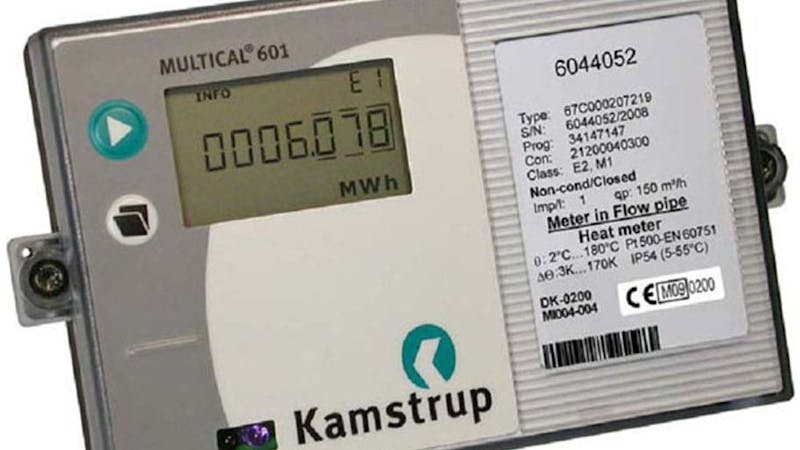
Heat usage levels can be monitored by the quantity of hot water used in the relevant zone being measured via a heat meter. This allows delivered heat to be accurately and easily billed.

Tenanted properties which are heated by renewable energy can also be easier to let and to keep let, with less time left unoccupied and not generating rental income.

Heat Metering for Biomass Boiler District Heating

Total control – Heat Metering for Biomass Boiler District Heating

Control and Safety at the Point of Use

With combustion only occurring centrally, the occupants or tenants in each individual zone are given a safe environment in which to live or work, with no annual safety checks, carbon monoxide alarms or health and safety provisions required at the point of use. This gives tenants all of the controls they would expect from a full boiler system, but in a smaller and safer package.

This makes biomass district heating advantageous for use in care homes, social landlords, hospitals, schools or any other applications where the owners, Energy Service Company (ESCO) or maintenance provider will have a legal duty of care and safety to building occupants.

Ease/Lower Costs of Maintenance and Servicing

In addition, district heating offers a range of administrative benefits, time and cost savings, as well as huge potential maintenance and servicing advantages.

Money for Green Heat; The Renewable Heat Incentive – Available for Domestic Properties NOW!!!!

Installations featuring a single boiler serving a single domestic property will not be eligible for the Renewable Heat Incentive (RHI) until April 2014.

However, district heating can offer homeowners access to the fuel security and generous payments that commercial, non-profit, public sector and charitable organisations currently enjoy. Where a single boiler serves more than one property (i.e with more than one Council Tax Account), the installation will be deemed as commercial and will be eligible for 20 years of payments from the commercial RHI, which has been available since November 2011.

RHI Compliant Biomass Boiler

RHI Compliant Biomass Boiler

Remote Control

Remote meter reading and heating control by web based applications or GSM are possible, as are remote diagnostics to ensure reliable operation. This can provide landlords (who have multiple tenanted properties) with ease of management, particularly if their properties are in different geographic locations. This can offer time and financial savings from not having to travel to remote locations.

In addition, with no fuel usage at the point of use, landlords can continue to provide warmth and comfort to tenants during extreme weather conditions, when a fuel delivery may not be possible and to provide a service to tenants which avoids the effort of them handling fuel.

Key Features and Components

Treco’s biomass district heating solutions are client-bespoke and suit a variety of applications, so please contact us on 0845 130 9012 or email us at info@treco.co.uk to discuss your project. Alternatively, do take a look at Treco’s case studies;  www.treco.co.uk/customer-satisfaction

Some of the key components of district heating schemes include;

  1. Boilers
  2. Buffer Tanks
  3. Fuel Stores
  4. Boiler Houses
  5. Expansion Vessels/Tanks
  6. Pre Insulated Underground Pipe
  7. Consumer Interface Units
  8. Flue Systems
  9. Heat Meters
  10. Remote Monitoring Systems

11. All associated electric and plumbing connections, pumps, valves

UK “on track” for 2020, maps out 2050 climate cost

Friday, December 2nd, 2011

(Reuters) – Britain is on track to beat its 2020 emissions-cutting target and could see energy use per person halved by 2050 if it optimizes its energy mix and use of technology, according to a “Carbon Plan” which the government announced on Thursday.

Chris Huhne, the UK’s minister for energy and climate change, said the UK “is absolutely committed to its targets” and is “on track” to exceed the 2020 target, even without factoring in lower emissions from a slowed economy.

The UK’s 2020 target is to reduce emissions by 34 percent, and this is legislated by a trio of 5-year carbon budgets running from 2008 to 2022.

Huhne is set to join a UK delegation at a U.N. climate summit in Durban, South Africa, where climate negotiators from more than 190 countries are scheduled to work until Dec 9 on a new globally binding deal aimed at cutting emissions.

The Department of Energy and Climate Change (DECC) said achieving optimal energy savings by 2050 would require a mix of electricity generation from nuclear and renewable sources such as wind, biomass and so-called carbon capture and storage plants.
It said the most cost-effective path to an 80 percent cut in emissions by 2050 would include a mix with 33 gigawatts (GW) of nuclear, 45 GW of renewables and 28 GW of fossil fuels.

Fossil-fuel fired plants would be fitted with carbon capture and storage (CCS) technology to trap exhausts.

The DECC said the most cost-optimal approach to achieving climate targets would trim 84 pounds a year per person off of Britain’s cost of energy in the economy, which is seen averaging 4,682 pounds per year.

“Every bit of progress we make is one more step away from import dependency, away from price volatility and from the emissions that threaten our way of life,” Huhne said in the DECC statement.
Speaking to reporters in London, he added: “A balanced mix of nuclear power, clean fossil fuels and renewables would also give us jobs in thriving green technology sectors and much greater energy security.”

Britain’s largest business lobby, the CBI, said the government’s Carbon Plan gives investors a “clearer” picture of how the nation can transition to a low-carbon economy.

But Matthew Brown, the CBI’s head of energy and climate change policy, said: “We now need this to be backed by consistent, long-term policies, avoiding any sudden changes of direction which put investors off.”

BINDING TARGETS

The UK’s Conservative-led coalition has set legally binding targets for greenhouse gas emissions over four five-year periods to 2027, known as carbon budgets. They are designed to put the nation on track toward an 80 percent cut in emissions by 2050.

The Carbon Plan suggests that by taking no action to fight climate change, the nation’s spending on net imported fossil fuels would rise to 86 billion pounds in 2050 from around 10 billion pounds today. But if the 2050 energy targets are met, that cost would be as little as 8-24 billion pounds.

In June, the UK set its fourth carbon budget covering the period 2023-2027, which entails reaching a level of emissions 50 percent below those of 1990. It plans to review its budgets in 2014.
The UK government has been pressing the 27-nation EU bloc to raise its 2020 climate ambition more in line with Britain’s ambitious goal.

Versus a UK target to cut emissions by 34 percent, the EU’s binding target is 20 percent below 1990 levels by 2020. It would rise to 30 percent only if other nations commit to comparable efforts under a broader pact.

(Reporting by Jeff Coelho and Oleg Vukmanovic; editing by Jason Neely)

Grand Designs Booked!

Tuesday, May 26th, 2009

TRECO have booked their stand for the Grand Designs Live Exhibition in October.. head to twebsite for more details… It’s a great way to see new home improvements and the latest gadgets. Definately worthwhile having a look around and TRECO will be there with a Tatano 2202 Biomass Boiler and a Biostar Pellet Boiler so you can see have a look at our boilers.

http://www.granddesignslive.com/home 

Signing off- TRECO… Saving the planet one boiler at a time! :)