Archive for the ‘Green Politics’ Category

Twin Wall Flue Systems for Biomass Boilers

Tuesday, April 23rd, 2013

There are a number of considerations for designing the flue system for a biomass boiler installation. Our project management team will manage this for Treco customers, but some important considerations are listed below. We fit Twin Wall, Insulated stainless steel multi-fuel chimney systems for Treco installs, which are eminently suitable for modern biomass boiler applications.

However, please contact us on 0845 130 9012 or email us at info@treco.co.uk to discuss the flue requirements for your biomass boiler project.

Twin wall flue systems for biomass boilers

Twin wall flue systems for biomass boilers

Regulations

All twin wall flue systems for biomass boilers (including log boilers, wood chip boilers, wood pellet boilers) must be installed to comply with Document J of the Building Regulations in England and Wales and part F of the Building Regulations in Scotland, as well as to the flue manufacturer’s installation instructions.

Flue Design

The biomass boiler twin wall flue system, from the point it leaves the building, should remain as straight as possible and be high enough to ensure sufficient draught to clear the products of combustion. The height necessary for this will depend upon the type of the appliance, the height of the building and the number of offsets within the system. However, a minimum flue height of 4.5 metres should is recommended in the Building Regulations.

Where it is not possible to construct a vertical flue for your biomass boiler system, Building Regulations dictate that no part of a chimney should form an angle greater than 45° from the vertical, except where it may be necessary to use a very short horizontal section, not exceeding 150mm, of flue to connect to a back outlet appliance. The run between offsets should not exceed 20% of the overall height of the chimney. In both instances, a maximum of two offsets in any one flue run should be used. Cleaning access must be provided in chimney systems with two offsets. It is also recommended that a vertical rise of 600mm should be allowed, immediately above the appliance before any change of direction.

Where the flue passes through a combustible floor or ceiling, an air gap clearance as per the manufacturer’s installation instructions is required. In multi-fuel applications and where the flue gas temperature is greater than 250°C, the ventilated fire stop and ventilated support components must be used at the bottom and top of the shaft. No joints can be made within the thickness of any floor or ceiling joists. The twin wall flue system must project below the ceiling in accordance to the diameter of the flue pipe.

Use of an adjustable length within the flue pipe connection or twin wall flue system immediately above the appliance enables removal of the appliance later without dismantling the full system.

In the room where the biomass boiler appliance is installed, provision should be made for an air vent. This is required to provide adequate air supply to allow the appliance and flue to operate efficiently. These requirements are specified in the Building Regulations. Where a flue passes through an external wall, a wall sleeve must be used.

Flue Size

The size of the chimney system should be as recommended by the biomass boiler appliance manufacturer’s installation instruction and in most cases should not be smaller than the appliance outlet. Confirmation from the manufacturer will be required if you wish to reduce the flue size. Flue sizing for commercial biomass boiler applications will depend on individual site details and must be designed and sized in accordance with manufacturer’s criteria. For open fireplaces and inglenooks with openings larger than 500mm x 550mm, a flue size with a cross sectional area equal to 15% of the total face area of the fireplace opening is required. On multi-fuel or wood burning closed biomass boiler appliances of up to 30kw rated output, the minimum flue size must be a 150mm internal diameter.

Support Components

Load bearing supports eg. wall supports and ceiling/joist supports are required to take the vertical weight of a twin wall flue system.  Non load bearing supports eg. wall bands and roof/rafter supports give lateral support throughout the chimney system. Wall bands should be fitted every 3 metres and where the flue offsets to ensure the system is adequately supported. Where the flue is free standing above the roof line a height of up to 3 metres can be achieved unsupported with the use of a reinforced or extended locking band at the joint immediately below and every joint above the roof level.

Twin wall flue systems for biomass boilers

Twin wall flue systems for biomass boilers

Provision for sweeping, cleaning and maintenance

Provision should be made for inspecting and cleaning the flue. This is particularly important on solid fuel applications. It is recommended that flues serving solid fuel appliances be swept and maintained as frequently as necessary but at least once a year.

Please contact us on 0845 130 9012 or email us at info@treco.co.uk to discuss the flue requirements for your biomass boiler project.

UKDEA Welcomes Government’s Heat Policy Proposals But Questions Whether They Go Far Enough

Wednesday, March 27th, 2013

logoblackbanner4p
UKDEA welcomes Government’s heat policy proposals but questions whether DECC have gone far enough to deliver the required growth in low carbon heat networks.

DECC today released its latest salvo of proposals to decarbonise the nation’s heat supplies.

Heading up the charge of the Department of Energy and Climate Change’s developing Heat

Strategy was their new policy document titled “The Future of Heating: Meeting the

challenge”. Following on from last year’s “Strategic Framework for Low Carbon Heat”, this

action plan has done well to translate loose aims into concrete policy proposals, though

there will plenty of work to do, to turn these proposals into successful action.

Heat is responsible for about a third of UK’s greenhouse gas emissions and it’s clear that

DECC still have the necessary ambition for low carbon heat in the UK; Secretary of State,

Ed Davey, stated in his forward, “Without changing the way we produce and consume heat,

we will not meet our long-term climate change target.”


District energy remains central to the Government’s low-carbon heat policies, with one of the

policy paper’s four chapters devoted to Heat Networks. Also considered are uses of Low

Carbon Heat in Industry, Heat and Cooling in Buildings, as well as Grids and Infrastructure.
UKDEA Chairman, Simon Woodward, said earlier “We are delighted that the Department of

Energy and Climate Change recognise greater use of low carbon district energy is a

necessity for this country, and we are very positive about the announcements today.

However, we’re left waiting until 2014 before consultation commences on any fiscal support

for implementation and therefore, we question whether the growth DECC are seeking will be

delivered by this policy paper when only development and not capital cost implementation

barriers are being addressed. We will of course continue to work with Government, to

identify ways to overcome these barriers and rapidly expand district energy networks in the

UK”.


What are the Proposals?

The flagship heat networks policy proposal is a new Heat Networks Delivery Unit (HNDU),

operating within DECC, providing support to local authorities that want to deliver district

energy schemes. HNDU will work closely with local authorities’ project teams, providing the

expertise that they may lack in-house. As part of this £9m programme, a total of £6m will be

available (for up to two financial years) to support early stage development costs and ready

projects for procurement.
However, at this stage, no funding or financial support is available to support capital costs of

delivering schemes. Although next year, DECC will look at the potential to provide

renewable heat networks with specific financial incentives, through the Renewable Heat

Incentive (RHI). This is welcome news, even though the initial aim had been to include such

support in the RHI from the start and further delay to consultation in 2014 remains

frustrating.
DECC intends to endorse industry-led consumer protection later this year and will also

consult on options for mandatory installation of heat meters as part of heat network

developments. DECC has continued to make clear that it does not wish to stop the growth

of the UK’s district energy sector through unnecessary regulation.
The DECC Policy Paper draws heavily on quantified evidence, including referenced

contributions from the UKDEA. Results from the recent Databuild research are included,

which estimated that there are around 2,000 DH networks in the UK, serving approximately

210,000 dwellings as well as 1,700 commercial and public buildings, all delivering around

2% of national heat demands. BRE’s recent work for DECC on barriers to District Heating

informs the proposals and is covered in more detail in a separate paper, also released today,

that is over 100 pages long. A further 48 page long Evidence Annex adds to the evidence

base.
The UKDEA will spend time considering the supporting evidence and ensure that any

necessary peer review forms part of our response to Government, alongside continuing

advice and submission of relevant evidence. Analysis of the policies will be carried out with

the input of the UKDEA’s diverse and experienced member base, so that the genuine

potential of the proposals can be understood.
Further Government action in this area isn’t limited to Whitehall and the UKDEA also eagerly

awaits the forthcoming Heat Generation Policy Statement from the Scottish Government

later this year, taking things forward from January’s Heat Vision (link below).

www.scotland.gov.uk/Resource/0041/00413386.pdf
The DECC Policy Proposal and associated documents can all be downloaded from DECC’s

website:

https://www.gov.uk/government/publications/the-future-of-heating-meeting-the-challenge


–ENDS–


Notes to Editors:

The partners, owners and operators of the largest district energy schemes in the UK have

aligned themselves in the creation of the UK District Energy Association (UKDEA); with the

aim of not only promoting district energy as a means to deliver significant carbon savings,

but also to establish a direct link between the Government and the industry’s small market

base.
The Association is a not for profit, non-trade association of companies and public sector

organisations involved or interested in district energy schemes of all sizes, from village

scale, community based ‘micro district energy’ schemes to city wide district heat energy

networks.
Still in its infancy, the UKDEA has attracted leading players in the industry, with the

UKDEA’s Full members comprising of 14 major organisations:

• Birmingham City Council

• Cofely District Energy Limited

• Coventry City Council

• ENER-G Switch 2 Limited

• Enviroenergy Limited

• E.ON Energy Solutions Limited

• Leicester City Council

• Newcastle City Council

• Newport City Homes Limited

• Shetland Heat, Energy and Power Limited

• Southampton City Council

• SW Energy Limited

• Thameswey Limited

• Veolia Environmental Services Limited
Together, these 14 organisations represent the: Birmingham, Coventry, Exeter, Leicester,

Liverpool Manchester, Milton Keynes, Newport, Newcastle, Nottingham, Sheffield, Shetland,

Southampton and Woking District Energy schemes, together with a number of schemes in

London including Olympic Park and Stratford City, Bloomsbury Heat & Power, Whitehall,

Hatfield, Dalston Square, Greenwich Millennium Village, Barbican Arts Centre, Guildhall,

Bastion House, Ontario Tower, Pan Peninsula, Baltimore Wharf, Wapping Lane, High Point

Village and London Central Markets.

The UKDEA also has 31 Associate Members, including international members, sharing and

contributing information to our district energy knowledge base.


UKDEA Key Facts:

Together the UKDEA members represent:

• Over 120 MW of low carbon generation plant (CHP, biomass, EFW etc)

• Supported by over 600 MW of conventional back up boiler plant

• Delivering over 700,000,000 kWh of heat each year

• Across energy networks which, if combined, would extend for more than 200km
Through Full and Associate membership, the UK District Energy Association’s aim is to

represent current and potential owners, developers, consumers, partners, operators, product

suppliers and interested parties of District Energy schemes throughout the UK.

The UKDEA welcomes new members. Be part of our district energy information sharing loop

and apply for membership of this forward thinking Association today.

DECC publishes the Government’s Heat Strategy – Government Sets Out Plans To Cut Emissions From Heat

Tuesday, March 26th, 2013


DECC publishes the Government’s Heat Strategy and provides an update on the Renewable Heat Incentive

Read the Full Press Release Here;

One year on from the launch of the UK’s first ever heat strategy, the Government has today set out the next steps to ensure affordable, secure, low carbon heating plays an important role in the nation’s energy mix, now and in the years to come.

The scale of the challenge is huge, with over 80 per cent of heating used in UK homes, businesses and industry produced by burning fossil fuels, and over a third of the UK’s carbon emissions coming from the energy used to produce heat.

The Government is committed to driving forward the move to low carbon alternatives to cut carbon and help meet renewables targets, and the heat strategy and its follow on action plan published today are an integral part of this vision.

Energy Secretary Edward Davey said:

“If we can increase the use of low carbon heating in our homes, businesses and across our economy, we can help reduce our dependence on costly carbon intense fossil fuels.

“Last year we launched the UK’s first ever heat strategy, to get us on the right pathway to decarbonisation and today we have published an update on the progress we have made so far, alongside a new set of actions specifically targeted at industrial heat, urban heat networks and heat in buildings.

“Many homes and businesses across the UK have already switched away from fossil fuels and are using kit like biomass boilers, heat pumps and solar thermal panels to provide heat, thanks to Government support, and I want to ensure even more householders and organisations get on board.”

Today’s action plan looks at the potential to cut emissions from heat across the whole UK economy and focuses on a number of key actions to spur on the move to low carbon heating alternatives and drive forward green growth, including:

  • A £9million package to help local authorities get heat network schemes up and running in towns and cities across the country, with a new Heat Networks Delivery Unit to sit within the Department of Energy and Climate Change (DECC) providing expert advice.
  • £1million for the cities of Manchester, Leeds, Newcastle, Sheffield and Nottingham to help them develop heat networks
  • 100 green apprenticeships to be funded primarily for young people in small scale renewable technologies
  • Up to £250,000 for a new first come first served voucher scheme for heating installers to get money off the cost of renewable heating kit installation training, with up to £500 or 75 per cent of the cost of the training course per person
  • Working with individual industrial sectors to design long term pathways to cut carbon across UK industry

There are also a number of helpful low carbon heat case studies in the action plan, including the first ever biomethane installation accredited under the RHI in Poundbury, Dorset; Aspire Housing’s work to install low carbon heating in the homes of 56 social tenants; and the gas CHP plant which provides heat to the 72 storeys of the tallest building in Western Europe, the Shard in London.

Update on renewable heat schemes

The Renewable Heat Incentive (RHI) scheme, launched for industrial and commercial customers in November 2011, is a key part of the Government’s approach to cutting carbon and spurring on the uptake of renewable heating kit. As recently announced, DECC is planning to carry out a review of the tariffs under this scheme to drive forward further uptake and has today set out which technologies will be included in this review.

Energy and Climate Change Minister Greg Barker said:

“The Renewable Heat Incentive, which has been available for non domestic investors for over a year, is a key part of our approach to cutting carbon and driving forward the move to more sustainable low carbon heating alternatives.

“So far over 1,000 groups have got on board, and today we have outlined details of our tariff review to help encourage even more organisations to invest.

“We remain committed to introducing an incentive scheme for householders too, and have today set out an updated timetable for its launch alongside plans to extend our renewable heat voucher scheme in the meantime.”

  • Non domestic RHI tariff review: DECC plans to consult on increased tariffs for some technologies where the evidence suggests a change needs to be made. The tariffs and technologies to be included in the review are available online.
  • Expanding the non domestic RHI: DECC consulted on expanding the non domestic RHI scheme to include further technologies in September 2012 and will confirm the way forward in Summer 2013.

The Government remains committed to introducing an RHI for householders, and has today set out an updated timetable for its launch alongside plans to extend the Renewable Heat Premium Payment (RHPP) in the meantime.

  • RHI for householders: Following on from the consultation on scheme design in September last year, the Government will confirm how a RHI for householders will work and publish the tariff levels in Summer 2013. It is expected that the scheme will be up and running for householders in Spring 2014. Research on householder views on renewable heat has also been published today, which will help inform the design of the RHI scheme.
  • RHPP extension: The Renewable Heat Premium Payment (RHPP) scheme is being extended until the end of March 2014, ahead of the launch of the RHI for householders. This scheme, first launched in July 2011, offers money off the cost of renewable heating kit such as biomass boilers, solar thermal panels and heat pumps and is largely targeted at those living off the gas grid. The scheme was due to close at the end of March this year.

Notes;

  1. The heat strategy policy document
  2. The research published today on perceptions of renewable heat
  3. The renewable heat training money off voucher scheme will support biomass, solar thermal, air and ground source heat pumps technologies and is being offered on a first come, first served basis to UK employers, with a particular emphasis on small and medium sized enterprises (SMEs). There is a maximum of £500 or 75 per cent of the cost of a training course available per person. Employers can apply for up to five vouchers and it is up to employers how they are allocate these amongst employees. The vouchers must be used for courses based on the Qualification Credit Framework Units derived from National Occupational Standards. There are a number of training providers and organisations that are able to offer such provision. Vouchers must be redeemed for a training course within three months of registering. More details on how to apply will be available online soon.
  4. The new £250,000 green apprenticeships programme will run for three years, with DECC funding offered in years one and two, and up to £2500 available funding per apprentice. More details will be available online soon.
  5. More details on the RHI including the tariff review
  6. More details on the extension of the RHPP scheme will be available shortly on the Energy Saving Trust website.

Why Biomass Offers Advantages for Code for Sustainable Homes Developments

Friday, March 22nd, 2013

Biomass and the Code for Sustainable Homes (CSH)

Background

The Code for Sustainable Homes is the national standard for the sustainable design and construction of new homes. The Code aims to reduce our carbon emissions and create homes that are more sustainable in the long term.

Benefits of CSH Certification
With a more environmentally-conscious public, aware of the urgent need to limit their
effects on climate change, there is a growing appetite amongst consumers for more sustainable products and services. With greater demand for homes that offer reduced environmental impact, lower running costs and features that enhance health and well-being, there is an increased need for home builders to demonstrate their capacity in sustainable home building, and to market the sustainability of their homes to homebuyers. The Code offers a tool for home builders to demonstrate the sustainability performance of their homes, and to differentiate themselves from their competitors. The Code is also mandatory of new build public sector projects and for developments over £300,000.

How the Code For Sustainable Homes Works

csh table 3

The Code measures the sustainability of a new home against categories of sustainable design, rating the ‘whole home’ and its Total Efficiency Rating (TER) as a complete package. The sustainability categories by which new homes are measured are outlined below, along with the relative weightings and points available.

The Rating System

The code works by awarding new homes an overall efficiency rating from Level 1 to Level 6, based on their performance against the 9 sustainability criteria above. These are combined to assess the overall environmental impact of the dwelling. The levels of energy efficiency are the standard percentages set out in Part L1A of the 2006 Building Regulations) http://www.planningportal.gov.uk/uploads/br/BR_PDF_ADL1A_2006.pdf

Note; The maximum emission levels set out in PartL1A of the 2006 Building Regulations is changing in summer 2013 to 30g/GJ particulate matter and 150g/GJ nitrogen oxides 30mg/Mj. This will also become the standard requirement for inclusion of a biomass boiler project into the Renewable Heat Incentive.

The code levels, based on minimum percentage reduction in Dwelling Emission Rates over Target Emission Rates are;

csh table 2

To reach CSH Code Levels 5 & 6, the architects have designed the properties to be airtight, with high levels of insulation and many sustainable features including low water use, roofs designed to maximise solar PV energy collection and biomass boilers.

To reach the different code levels, a quantity of points is required;

csh table

Biomass and the Code for Sustainable Homes

Biomass can be very beneficial to CSH Projects, as the Energy and Carbon Emissions Category Number 1 carries the greatest overall weighting of all the factors at 36.4%.

The Biomass Energy Centre shows that biomass as a fuel type offers the highest CO2 reductions against fossil fuel types of 96-98%;

Treco-Table for web smaller

So, if a high 92%+ efficiency biomass boiler is installed in a new build project, with emissions below 30g/GJ particulate matter and 150g/GJ nitrogen oxides 30mg/Mj, it can contribute towards and increase the overall CSH Level of the project to Code 5/6 level.

However, an architect or suitably qualified building professional should be consulted in order to assess the specific CSH values of your project, as this is a highly specialist area.

For more information on the Code for Sustainable Homes;

http://webarchive.nationalarchives.gov.uk/20120919132719/www.communities.gov.uk/documents/planningandbuilding/pdf/codesustainhomesstandard.pdf

REA Publishes First Ever Renewables Industry Confidence Survey

Monday, March 18th, 2013

The REA has published the first ever renewables industry confidence survey, please read the press release below

Modest optimism short term, but some doubts over key policies. Overall score: 47%

The REA has conducted this survey in order to better understand the current state of the UK renewable energy sector [1].

The survey takes place at a time of major policy upheaval for the renewable power and renewable transport sectors and follows several analyses suggesting that investment in the renewables project pipeline has slowed [2]. This morning’s Financial Times [3] reported the concerns of REA members responding to the survey about the new Contracts-for-Difference mechanism under the Energy Bill.

Senior managers from 68 companies responded to the survey. Findings confirm the Energy Bill is cause for concern with 51% of renewables executives believing that Contracts for Difference will not be effective in bringing forward new renewable power capacity. 69% believe that the lack of an emissions target in the Energy Bill sends a ‘poor’ or ‘very poor’ signal to investors. Only 4% believe the UK has a ‘good’ or ‘excellent’ chance of meeting its 2020 renewable energy target.

However, the survey shows no significant overall deterioration in employment over the past six months. Just under a half of companies reported broadly stable employment levels and nearly as many firms recruited staff as have laid them off. Looking forward over the next six to twelve months 62% of companies expect employment levels to stay the same, and twice as many firms expect to see employment increasing, compared to those expecting a decrease in employment.

REA Chief Executive Gaynor Hartnell comments:

“We will repeat this survey every six months in order to build up a comprehensive picture showing trends in confidence levels. Billions of pounds of investment needs to flow into renewables infrastructure. Our aim is to provide Government and stakeholders with a tool to gauge how policies are being received.

“The UK has to achieve a higher growth rate than any other Member State in order to reach its 2020 renewables target. Mixed messages remain a problem and industry needs policy certainty and political consistency. The prize is up to 400,000 jobs by 2020, economic growth and greatly improved energy security.

The REA has combined short term business outlook with confidence in meeting the 2020 target and confidence in the regulatory framework to give an overall ‘Renewables Industry Confidence Index’.

The ‘Renewables Industry Confidence Index’ score for this first iteration of the survey is 47% [4].

r

While 100% would constitute absolute certainty and a flourishing industry, we believe a score of around 75% would indicate a healthy and confident industry likely to meet the 2020 renewable energy targets. The UK has one of the lowest renewable energy targets in Europe at 15% of total energy, but also one of the most challenging given our low starting point.

The survey reveals serious concerns around Contracts for Difference, as set out in the Energy Bill, and dissatisfaction with the functioning of the Renewable Heat Incentive. It also makes key recommendations for improving investment going forward, including sending a clear signal to investors; ensuring CfD proposals in the Energy Bill work for independent generators; setting an RTFO trajectory to 2020; and introducing new RHI tariffs on time.

A selection of comments from survey respondents is set out below to illustrate industry perspectives.

General comments on UK policy and political landscape

An anonymous respondent from a leading UK manufacturer said:

“Too many conflicting signals have been given recently causing doubt as to whether the Coalition has a unified position on promoting a balanced mix in the future UK energy supply, including renewable technologies. There is also doubt that the Government is convinced that renewables have a long term role to play, and a widespread belief that HM Treasury has the upper hand in determining the ultimate rate of market adoption of renewables.”

An anonymous financier said:

“There is no shortage of capital for energy projects but it is an international market and many other countries are perceived as more predictable and trustworthy than the UK.”

Craig Ibbetson, Director of Regen Energy, said:

                “Simplify the regulatory framework. It is too complex.”

James Astor, Managing Director at Agrivert Biogas, said:

“Recent Government actions mean that private equity and banks see Government renewable policy as a “risk” that has to be priced.”

David Williams, Chief Executive at Eco2, stresses that this uncertainty goes back further than the past six months:

“Investor confidence has deteriorated with the many changes in legislation seen in the UK over the last two years.”

Tim Jackson, Geothermal Development Manager at Sinclair Knight Merz, said:

“The UK is falling behind other countries in Europe and Africa in terms of attractiveness for investment in new renewable generating technologies.”

Energy Bill & Electricity Market Reform

The REA is not surprised that the electricity sector recorded the highest levels of ‘very poor’ confidence. The REA is currently urging Government to solve the critical route-to-market issue for independent generators, and will debate this issue at an open meeting on 27th March [5]. Independent generators are expected to deliver between a third and one half of necessary UK investment in the power sector to 2020. There is widespread concern that, as currently conceived, Contracts for Difference are not investable for independent generators. Ministers have committed to securing a solution and are expected to report back in June/July.

Andrew MacLellan, Director of ENER-G, said:

“Lack of regulatory and incentive stability, with a three to five year outlook, is proving a major obstacle to investment in the sector. Last year it was the RO review, this year it is EMR.”

Steven Edrich, Head of Strategy at 2OC, said:

“Continuing uncertainty over EMR and how the RO will be left to work beyond 2017 are crippling industry’s ability to look ahead and making it very difficult for banks to approve funding on projects now.”

Sector-specific concerns

There is more confidence in the small scale Feed-in Tariff than the Renewables Obligation or Renewable Heat Incentive. Overall, 65% of respondents in renewable heat and electricity had poor or very poor confidence in their sector’s regulatory framework.

r

While 100% would constitute absolute certainty and a flourishing industry, we believe a score of around 75% would indicate a healthy and confident industry likely to meet the 2020 renewable energy targets. The UK has one of the lowest renewable energy targets in Europe at 15% of total energy, but also one of the most challenging given our low starting point.

The survey reveals serious concerns around Contracts for Difference, as set out in the Energy Bill, and dissatisfaction with the functioning of the Renewable Heat Incentive. It also makes key recommendations for improving investment going forward, including sending a clear signal to investors; ensuring CfD proposals in the Energy Bill work for independent generators; setting an RTFO trajectory to 2020; and introducing new RHI tariffs on time.

A selection of comments from survey respondents is set out below to illustrate industry perspectives.

General comments on UK policy and political landscape

An anonymous respondent from a leading UK manufacturer said:

“Too many conflicting signals have been given recently causing doubt as to whether the Coalition has a unified position on promoting a balanced mix in the future UK energy supply, including renewable technologies. There is also doubt that the Government is convinced that renewables have a long term role to play, and a widespread belief that HM Treasury has the upper hand in determining the ultimate rate of market adoption of renewables.”

An anonymous financier said:

“There is no shortage of capital for energy projects but it is an international market and many other countries are perceived as more predictable and trustworthy than the UK.”

Craig Ibbetson, Director of Regen Energy, said:

                “Simplify the regulatory framework. It is too complex.”

James Astor, Managing Director at Agrivert Biogas, said:

“Recent Government actions mean that private equity and banks see Government renewable policy as a “risk” that has to be priced.”

David Williams, Chief Executive at Eco2, stresses that this uncertainty goes back further than the past six months:

“Investor confidence has deteriorated with the many changes in legislation seen in the UK over the last two years.”

Tim Jackson, Geothermal Development Manager at Sinclair Knight Merz, said:

“The UK is falling behind other countries in Europe and Africa in terms of attractiveness for investment in new renewable generating technologies.”

Energy Bill & Electricity Market Reform

The REA is not surprised that the electricity sector recorded the highest levels of ‘very poor’ confidence. The REA is currently urging Government to solve the critical route-to-market issue for independent generators, and will debate this issue at an open meeting on 27th March [5]. Independent generators are expected to deliver between a third and one half of necessary UK investment in the power sector to 2020. There is widespread concern that, as currently conceived, Contracts for Difference are not investable for independent generators. Ministers have committed to securing a solution and are expected to report back in June/July.

Andrew MacLellan, Director of ENER-G, said:

“Lack of regulatory and incentive stability, with a three to five year outlook, is proving a major obstacle to investment in the sector. Last year it was the RO review, this year it is EMR.”

Steven Edrich, Head of Strategy at 2OC, said:

“Continuing uncertainty over EMR and how the RO will be left to work beyond 2017 are crippling industry’s ability to look ahead and making it very difficult for banks to approve funding on projects now.”

Sector-specific concerns

There is more confidence in the small scale Feed-in Tariff than the Renewables Obligation or Renewable Heat Incentive. Overall, 65% of respondents in renewable heat and electricity had poor or very poor confidence in their sector’s regulatory framework.

Renewable Heat Support Faces Stricter Controls

Thursday, March 14th, 2013

FWI-HOME

A great piece by Paul Spackman published on March 5th on the Farmers Weekly website http://www.fwi.co.uk/articles/05/03/2013/137980/renewable-heat-support-faces-stricter-controls.htm

Support payments for renewable heat will be subject to tighter budgetary and environmental controls under plans announced by the government.

From this summer the Department of Energy and Climate Change will introduce a system of tariff cuts for non-domestic Renewable Heat Incentive payments, similar to that applied to Feed-in Tariffs. This means RHI rates for new claimants will be reduced by at least 5% if uptake exceeds a set level, although cuts could be up to 20%.

For most technologies the trigger for tariff cuts will be if uptake is 50% or more above DECC’s target deployment, although for others (solar thermal and ground-source heat pumps) it is 5% above. DECC will publish monthly figures on its website to help people gauge whether a tariff cut is likely, although uptake to date has been well below any such trigger.

In addition, there will be regular reviews of the scheme to ensure technologies are adequately supported and the budget is not exceeded. The first review is due earlier than planned this spring in light of “uptake to date and the new evidence on costs and performance of renewable heating technologies”.


DECC rejected proposals to introduce a “pre-accreditation” system that would have allowed potential RHI claimants to lock into the tariff rate available at the time of application.

“The proposals remove some of the uncertainty that surrounded future tariff levels, but it is unfortunate there are no plans to provide any certainty as to tariff levels for a project before any capital expenditure is committed,” commented Shirley Mathieson, head of renewables at Saffery Champness.

Gunt _powchip_austrNew sustainability rules

Another change is the introduction of two sustainability standards for new and existing solid biomass and biogas heating installations.

All systems will have to meet “lifecycle greenhouse gas emissions targets” and land criteria in order to receive payments.

The GHG target requires solid biomass or biogas/biomethane to give at least a 60% GHG saving compared to fossil fuels (waste-based feedstocks are exempt). The land criteria requires woodfuel to come from a sustainable source and other feedstocks such as energy crops will have to meet the same land criteria as set out in the EU’s Renewable Energy Directive. This protects land with high biodiversity or high carbon stock value, such as primary forest, peatland or wetland.

People buying-in woodfuel will be able to prove RHI sustainability compliance by using an approved supplier and keeping a record of any purchases. DECC hopes to have completed a list of approved suppliers by the end of this year.

Farms or businesses with installations under 1MWth capacity that are using wood or energy crops from their own land will be able to continue doing so under the new rules. Perennial energy crops meeting Energy Crops Scheme for England, or its equivalent, sustainability standards will automatically meet RHI land criteria.

The other option for demonstrating compliance is to submit regular reports to Ofgem showing fuel complies with sustainability criteria. http://www.fwi.co.uk/articles/05/03/2013/137980/renewable-heat-support-faces-stricter-controls.htm

The Renewable Heat Incentive – How Can It Benefit You?

Wednesday, March 13th, 2013

You may or may not have heard of the Renewable Heat Incentive (RHI). It is a Government Scheme that pays the owners of renewable heating technologies including biomass boilers, log boilers, wood burning boilers, wood chip boilers and biomass boiler that run on a choice of fuels including grain and miscanthus for generating and using renewable heat.

calculator

Administered by the energy regulator OFGEM, the RHI is part of a programme to reduce the country’s CO2 emissions by replacing fossil fuel heating systems with renewable heating solutions, such as biomass.

The first phase of the RHI is targeted at commercial, not-for-profit, charity and public sector organisations.The RHI offers annual payments for 20 years to the owners of the equipment, index linked to inflation. Combined with the fuel cost savings over fossil fuels, which can be 50-80%, the biomass heating opportunity offers a great return on investment.

Once your biomass installation is accredited by OFGEM, the submission of quarterly heat meter readings determine the quarterly payments that will follow. If you are considering replacing your oil or electric heating system with a biomass boiler, you may be wondering how much you may save on your fuel costs or how much the Renewable Heat Incentive (RHI) may pay out every year over the 20 year scheme?

For example, a country estate with main house and offices using a 198kW system would receive upwards of £20,000 and a farm house with cottages and a holiday let using 100kW system would earn £10,000 or more per annum for the 20 year duration of the scheme.

We have developed our own RHI Calculator which is available right now as a free download. This simple tool shows the installed cost of a Treco biomass boiler system, your potential earnings from the scheme over 20 years, your fuel savings and the payback period. Click here to see four worked examples from Treco’s RHI Calculator or click here http://www.treco.co.uk/customer-satisfaction/ to see some case studies of Treco’s RHI accredited projects.

Treco have had a good response for wood burning boilers to their RHI application assistance packages and biomass still represents some 90% of accredited installations.

We now have a full time staff member handling applications and having gained a solid amount of RHI accreditations for our clients. To find out more either call us on 0845 130 9012 or email us at info@treco.co.uk.

To find out more about the RHI, including how to apply, please visit OFGEM’s website http://www.ofgem.gov.uk/e-serve/RHI/Pages/RHI.aspx

Case Study; Biomass Replaces Two Oil Boilers in District Heating Scheme, Delivering 80% Fuel Cost Saving and Gaining RHI Accreditation

Tuesday, March 12th, 2013

One of our recent installations, the Great barn in Devon, has just gained RHI accreditation, so we thought we would share the case study with you.

great barn main image for web#Background

The Great Barn is a listed 15th Century barn which is part of a rural estate in Devon also including a manor house and 2 cottages. The barn was extensively renovated in 2004 and the driver for the project was to reduce heating costs and CO2 emissions by switching from oil to locally sourced biomass.

The Requirement

As one of the South West’s premier wedding venues, a primary requirement was reliability. The two existing oil boilers needed to be replaced with a single biomass boiler, providing heating and hot water to 4 separate buildings. Treco were tasked with designing and installing a biomass system, working with the heating engineer who designed
and installed the existing system.

Gunt_powerchip_75_100 2 low res for webComplete Biomass District Heating Package

Treco supplied and installed a single 100kW Guntamatic Powerchip biomass boiler feeding a district heating scheme. The boiler and fuel store were installed in a purpose-built boiler house with all of the buildings linked using insulated underground pipe. All fuel is sourced from
the owner’s woodland, to be seasoned on site and chipped directly into the fuel store.
The Renewable Heat Incentive

As well as fuel cost savings of 80%, the installation is now accredited into
the Renewable Heat Incentive and the client is now receiving RHI payments. The RHI payments and the fuel cost saving ensure that the project is sustainable and financially viable.

Project Summary
The client was responsible for the construction of the boiler house and
wood chip store. Treco installed and commissioned the biomass boiler, working with the local heating engineer to connect to the current system.

The district heating scheme included;

• A top of the range 100kW Guntamatic Powerchip biomass boiler (with a
fully automated wood chip fuel delivery system).
• 5m agitator allowing 75m3 of fuel storage and ensuring less than 3 fills
a year.
• A 2,000 litre thermal store.
• High efficiency, low energy modulating main system pump.
• 160m of twin underground pre insulated pipe.
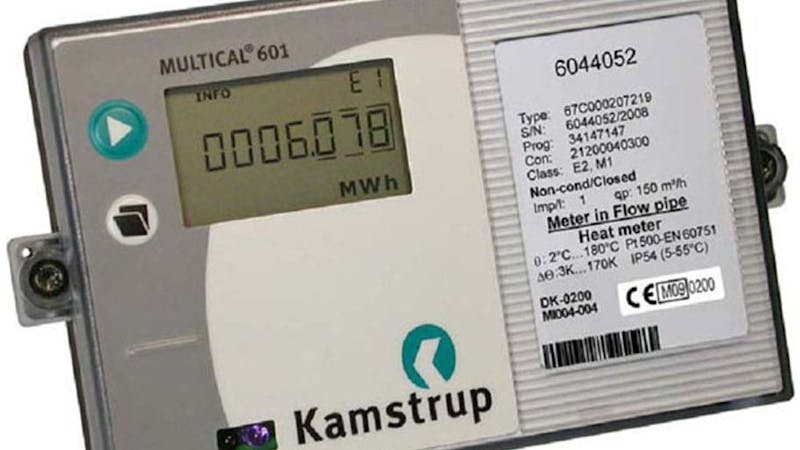
• 5 x class 2 RHI eligible ultrasonic heat meters complete with certification.
• 4 heat exchanger assemblies.
• Full assistance with RHI application including schematic drawings.
• Commissioning, programming and end user training.

Biomass Boiler suction tubes

Biomass Boiler suction tubes

Key Facts*

Total Project Price; £75,000

Fuel Consumption; 37 tonnes of wood chips, per annum. (based on 100kW boiler, in a similar application)

Fuel Cost Saving; (Source; Biomass Energy Centre) Wood chips; Up to 80% (utilises own wood fuel supply).

CO2 Saving; (Source; Biomass Energy Centre) Up to 98% or 44 tonnes vs heating oil

RHI Payments; A project of this size would gain an average of £10,906 every year for 20 years, index linked to inflation

Payback Period; 5-6 years (combining RHI income
& fuel cost saving).

(*Financial information not specific to this project – figures are based on an average of several typical projects of this size. Current information on RHI payments for guidance only, not to be considered a guarantee).


Emission Limits for Renewable Heat Incentive Announced by DECC

Wednesday, March 6th, 2013

greg-barker-300x179

The government’s Renewable Heat Incentive scheme will include air quality requirements for new biomass facilities from no later than the end of 2013

Air quality requirements were announced by the government on Wednesday February 27th as part of changes to the Renewable Heat Incentive scheme (RHI).

The new requirements will mean that proposed facilities, such as wood-burning biomass energy plants, will need to meet specific emissions limits for particulate matter and nitrogen oxides in order to qualify for government incentives.

DECC minister Greg Barker announced changes to the Renewable Heat Incentive scheme this week

According to the Department of Energy and Climate Change (DECC), these requirements will ‘significantly reduce’ the negative health impacts of the RHI, producing an estimated benefit of £184 million in 2020 and £3,368.6 million over the lifetime of the policy.

The RHI was launched in November 2011 to reward organisations for generating renewable heat and biomethane gas which can be injected back into the national grid through a variety of technologies.

However, DECC announced several changes to the RHI for commercial, industrial and community organisations this week following the end of a consultation in September 2012 on improving the scheme.

According to DCC, although the impact of biomass heat generation on air quality is small at the moment, the uptake of biomass installations driven by RHI subsidy is expected to increase and there are currently no requirements for plants to have air pollution abatement equipment installed.

But the new RHI requirements will set emission limits from new installations at 30 grams per gigajoule for particulate matter PM10 and 150 grams per gigajoule for nitrogen oxides with evidence that these limits are being met to be sent to regulatory body Ofgem. These requirements are then set to be reviewed again by the government in July 2015.

In its announcement of the changes to the scheme, DECC said the RHI was “essential to help us meet our legally binding renewables targets and is crucial as we move towards our goal of reducing our carbon emissions from heat. The action we will take on biomass sustainability and air quality will provide the transparency, longevity and certainty needed to secure investment in biomass heat at all scales while ensuring that we deliver real greenhouse gas reductions and protect our environment, both at a global and local level.”

Other RHI changes

Other changes to the RHI announced on Wednesday include flexible tariffs to control the budget of the scheme, sustainability requirements for new and existing biomass installations, tariff reviews, and the simplification of metering requirements.

Air quality requirements will form part of the RHI by autumn 2013, subject to Parliamentary process, but no later than the end of 2013. Biomass sustainability requirements will come into force in April 2014.

DECC minister, Greg Barker, said: “I am fully committed to ensuring our Renewable Heat Incentive helps as many organisations as possible get on board with a range of exciting sources of renewable heat, and at the same time stays within its means.”

He added: “This is however just the first step on our journey to safeguard longevity, provide certainty to industry and sustain growth under this scheme. We are also continuing to explore whether the tariffs we offer are set at the best levels to encourage further uptake, looking at how we can open up the scheme to new technologies, and considering the right approach to encourage householders to invest in renewable heat.”

“We are continuing to work with industry and others on our plans and will be making announcements about our proposals for support as soon as possible.”

In February it was revealed by Defra minister Richard Benyon in parliament that health impacts from particulate matter PM2.5 emissions as a result of biomass combustion are expected to cost the UK £215 million in 2020 (see airqualitynews.com story).

Farmers – Take Advantage of Energy Crop Scheme Before 31st August and Get 50% Funding

Tuesday, March 5th, 2013

miscanthus rev Feb 2010.indd

Natural England is urging farmers and other land managers to apply to the Energy Crops Scheme by Saturday 31st August 2013 for new agreements starting this year.

miscanthus harvest

Energy crops are used as a substitute for fossil fuels in the production of heat and power, and as a result they can contribute to a reduction in greenhouse gas emissions and help to combat climate change.

The Energy Crops Scheme (ECS) is designed to support the planting of Miscanthus and short rotation coppice energy crops in appropriate locations in England. Similar schemes exist in Scotland and Northern Ireland.

Payments under the scheme cover 50 per cent of the costs of establishing the crop. ECS participants can plant in one year, or choose to phase the planting for up to three years. Under the arrangements for the current scheme planting can be undertaken in 2013, 2014 and 2015.

However, the scheme has yet to fulfill its potential according to Lucy Hopwood, Head of Biomass and Biogas at NNFCC: “Currently there are around 12,000 hectares of Miscanthus or short rotation coppice being grown in the UK for energy production but the potential land available in the UK for growing these crops is far greater,”

“There are hundreds of thousands of hectares of land across the UK which could be used to grow energy crops and produce millions of tonnes of home grown biomass for the heat and power sector, but without strong government support we will become more reliant on biomass imports and undermine our ability to meet our target of producing 15 per cent of energy from renewable sources by 2020,” she added.

miscanthus rev Feb 2010.inddThe ECS was established as part of the Rural Development Programme for England, 2007-2013. With the current RDPE drawing to a close at the end of 2013, no agreements under the current scheme can be entered into after that date.

No decision has been made on how energy crops will be supported after the current scheme comes to an end. However, Natural England said that the Government is currently working on the next Rural Development Programme, which will start in January 2015 with any new agreements likely to be issued from January 2016.

In the meantime, Natural England is assuring Energy Crops Scheme customers that all existing agreements, along with all new agreements (that are finalised before 31st December 2013), will continue until their agreed end date.

If you wish to apply for the scheme, amend an existing agreement, or would like more information then please contact Natural England’s Energy Crops team on 0300 060 1624/1413, e-mail ecsenquiries@naturalengland.org.uk or visit the ECS webpages.

Talk to the Experts