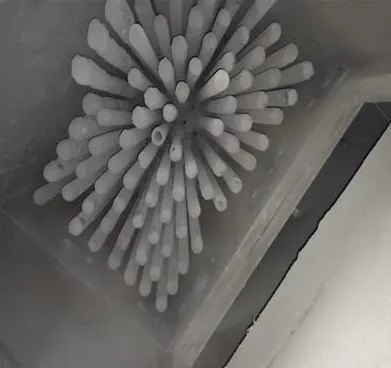
Ceramic flue gas filters play an important role in controlling particulate emissions from biomass boilers, particularly installations operating on waste wood and other fuels where effective emissions abatement is essential.
Over time, ash, soot and other deposits can accumulate within the filter system, potentially restricting flue gas flow, increasing pressure drop and affecting the performance of the boiler and emissions control equipment.
At Treco, we provide specialist servicing, inspection and maintenance of ceramic filtration systems used with commercial and industrial biomass boilers.
Our engineers can assess the condition of your ceramic filter, investigate operational problems and carry out appropriate maintenance to help maintain reliable filtration performance.
Whether your system requires routine servicing, fault diagnosis or replacement of damaged filter components, Treco can help.
Contact Treco to discuss your biomass boiler ceramic filter servicing requirements.
Specialist Biomass Ceramic Filter Servicing
Ceramic filtration systems operate in demanding conditions, handling hot flue gases containing particulate matter generated during biomass combustion.
Maintaining these systems is important for reliable boiler operation and effective emissions control.
Treco provides ceramic filter inspection, servicing and maintenance, with work tailored to the particular filter design, manufacturer and operating conditions.
Depending on the system, maintenance may include:
- Inspection of ceramic filter elements for damage and deterioration.
- Assessment of ash and particulate accumulation.
- Cleaning of filter elements using appropriate methods.
- Inspection of filter housings, seals and associated components.
- Checking differential pressure across the filter.
- Inspection of automatic filter cleaning systems.
- Checking pulse-cleaning equipment, where fitted.
- Inspection of ash collection and discharge arrangements.
- Investigation of restricted flue gas flow.
- Identification of damaged components requiring repair or replacement.
Ceramic filter elements can be fragile and may be damaged by unsuitable cleaning methods. Maintenance should therefore follow the filter manufacturer's instructions and appropriate safety procedures.
Why Is Regular Ceramic Filter Maintenance Important?
A ceramic filter is designed to remove particulate matter from the flue gases before they are discharged through the chimney.
As particulate matter accumulates on the filter elements, resistance to flue gas flow can increase.
Many ceramic filtration systems incorporate automatic cleaning arrangements to remove accumulated deposits, but these systems still require inspection and periodic maintenance.
Failure to maintain the filter can result in several operational problems.
Increased Differential Pressure
Excessive particulate accumulation can increase the pressure difference across the filter.
This may restrict flue gas flow, place additional demands on the induced draught fan and interfere with normal boiler operation.
Reduced Boiler Reliability
A blocked or poorly functioning ceramic filter can contribute to boiler alarms, shutdowns and reduced operating availability.
Regular maintenance can help identify developing problems before they result in an unexpected breakdown.
Increased Particulate Emissions
Damaged ceramic elements, failed seals or bypass leakage can allow particulate matter to pass through the filtration system.
Where the installation is subject to an environmental permit or emissions limits, maintaining the integrity of the filtration system is particularly important.
Damage to Filter Components
Excessive ash accumulation, incorrect cleaning pressures, thermal stress and other operating problems can contribute to premature deterioration of ceramic filter elements and associated components.
Routine inspection can help identify these issues before more extensive damage occurs.
Do you have a ceramic filter question?
Speak to our team on 01884 684916


Ceramic Filter Cleaning and Inspection
Cleaning is an important part of ceramic filter maintenance, but the correct method depends on the filter design and the nature of the deposits.
Some systems use automatic reverse-pulse cleaning to dislodge accumulated ash from the ceramic elements.
Other maintenance activities may require manual inspection and specialist cleaning procedures.
Treco can assess the condition of the filtration system and identify appropriate maintenance requirements.
Particular attention is given to:
- Accumulated ash and particulate deposits.
- Condition of the ceramic filter elements.
- Evidence of cracking or physical damage.
- Filter sealing arrangements.
- Ash discharge systems.
- Differential pressure readings and trends.
- Operation of automatic cleaning equipment.
Where filter elements are excessively blocked or damaged, cleaning alone may not restore satisfactory performance.

Comply with Environmental Permit

Reduce Breakdowns and Save Money on Parts

Increase Efficiency and Reduce Emissions
Ceramic Filter Fault Diagnosis and Repairs
Problems with ceramic filters are not always caused by blocked filter elements.
Faults can also develop within the cleaning system, instrumentation, ash handling equipment or associated flue gas arrangements.
Common issues include:
High Differential Pressure
A sustained increase in differential pressure may indicate excessive particulate loading, ineffective cleaning or restricted flue gas flow.
The cause should be investigated before attempting to restore normal operation.
Damaged or Cracked Ceramic Filter Elements
Ceramic elements can suffer mechanical damage, thermal stress or deterioration over time.
Damaged elements may allow particulate matter to bypass the filtration media, potentially affecting emissions performance.
Automatic Cleaning System Faults
Where pulse-cleaning systems are fitted, problems with valves, compressed air supply, controls or cleaning sequences can prevent effective removal of accumulated deposits.
Ash Removal Problems
Blocked or malfunctioning ash discharge equipment can cause ash to accumulate within the filter housing, affecting performance and potentially damaging components.
Filter Sealing Failures
Deteriorated or incorrectly fitted seals can allow flue gases to bypass the filtration elements.
This may compromise particulate removal even where the ceramic elements themselves remain in good condition.
Treco can investigate operational problems and recommend appropriate repairs or replacement components, subject to system design and parts availability.
Ceramic Filter Element Replacement
Ceramic filter elements are exposed to high temperatures, particulate loading and repeated cleaning cycles.
Over time, individual elements may become damaged or reach the end of their useful service life.
Where replacement is required, it is important that the new elements are compatible with the existing filtration system.
Considerations include:
- Filter element dimensions and configuration.
- Material and temperature suitability.
- Filtration characteristics.
- Compatibility with the cleaning system.
- Sealing arrangements.
- Manufacturer requirements.
Treco can assist with identifying suitable replacement components and assessing whether individual elements or other filter components require replacement.
The availability of replacement elements depends on the filter manufacturer and model.
Ceramic Filters for Waste Wood Biomass Boilers
Ceramic filtration systems are particularly relevant to certain waste wood biomass installations, where particulate emissions control forms an important part of the overall emissions abatement system.
Depending on the fuel classification, boiler technology and applicable regulatory requirements, waste wood combustion installations may be subject to environmental permitting and specific emissions limits.
Ceramic filters can provide effective particulate removal when correctly designed, operated and maintained.
However, a ceramic particulate filter does not automatically remove gaseous pollutants or guarantee compliance with every emissions limit.
Where additional pollutants require control, further emissions abatement equipment may be necessary.
Treco understands the importance of maintaining emissions control equipment alongside the biomass boiler itself.
Ceramic Filter Maintenance and Environmental Permit Compliance
For installations operating under an environmental permit, maintaining the emissions abatement equipment is an important operational responsibility.
Permits may include conditions relating to emissions limits, equipment maintenance, monitoring and record keeping.
A poorly maintained ceramic filter can compromise the installation's ability to meet its permitted particulate emissions limits.
Regular inspection and maintenance can help operators:
- Identify damaged filter elements and seals.
- Maintain effective particulate filtration.
- Reduce the risk of unexpected filter failures.
- Investigate abnormal differential pressure readings.
- Maintain appropriate service and maintenance records.
- Support compliance with applicable permit conditions.
The precise maintenance and monitoring obligations depend on the installation's environmental permit and the relevant regulatory requirements.
Routine servicing does not replace any formal emissions monitoring or testing required under the permit.
How Often Should a Biomass Ceramic Filter Be Serviced?
There is no single maintenance interval suitable for every ceramic filtration system.
Servicing frequency depends on factors including:
- Filter manufacturer recommendations.
- Boiler operating hours.
- Fuel type and ash characteristics.
- Particulate loading.
- Filter design and cleaning arrangements.
- Differential pressure trends.
- Environmental permit conditions.
Systems operating continuously or handling fuels with higher particulate loading may require more frequent attention than installations operating intermittently.
Treco can review the operating conditions and maintenance history to help establish an appropriate servicing programme.
Why Choose Treco for Ceramic Filter Servicing?
Treco specialises in commercial and industrial biomass heating systems, providing servicing, maintenance, repairs and technical support.
Our experience extends beyond the biomass boiler itself to associated plant and equipment, including flue gas filtration systems.
We understand the relationship between combustion performance, particulate loading, flue gas flow and emissions control.
Benefits of working with Treco include:
- Experience servicing commercial and industrial biomass installations.
- Ceramic filter inspection and maintenance.
- Investigation of high differential pressure and filtration problems.
- Support with damaged filter elements and associated components.
- Knowledge of biomass combustion and emissions control.
- Wider biomass boiler servicing and maintenance support.
- Experience with installations operating on waste wood.
Where practical, ceramic filter maintenance can also be coordinated with planned biomass boiler servicing to reduce disruption and unnecessary site visits.
Speak to our maintenance team
For expert advice, speak to our maintenance team today.
Call 01884 684916 or use the form below to book your visit.
Frequently Asked Questions
- What does a ceramic filter do on a biomass boiler?
A ceramic filter removes particulate matter, including fine ash and soot, from biomass boiler flue gases before they are discharged through the chimney. It is primarily an emissions control device.
- How often should a biomass ceramic filter be serviced?
The interval depends on the filter manufacturer, operating hours, fuel characteristics and system conditions. Regular inspections and monitoring of differential pressure can help identify when maintenance is required.
- Can ceramic filter elements be cleaned?
Yes, many ceramic filtration systems are designed to allow accumulated particulate matter to be removed through automatic cleaning or approved maintenance procedures. However, unsuitable cleaning methods can damage the elements.
- What causes high differential pressure across a ceramic filter?
Potential causes include excessive ash accumulation, ineffective pulse cleaning, blocked filter elements, restricted ash discharge and unusually high particulate loading.
- Can damaged ceramic filter elements be repaired?
This depends on the element design and nature of the damage. Cracked or structurally damaged elements commonly require replacement rather than repair to maintain filtration integrity.
- Can a blocked ceramic filter cause a biomass boiler breakdown?
Yes. Excessive restriction in the flue gas path can interfere with boiler operation and may trigger alarms or shutdowns.
- Does a ceramic filter guarantee environmental permit compliance?
No. Ceramic filters primarily control particulate emissions. Compliance depends on the complete installation, fuel, combustion conditions, applicable emissions limits and any additional abatement equipment required.
- Can Treco service ceramic filters on biomass boilers installed by other companies?
Yes. Treco provides servicing and maintenance support for biomass installations installed by other contractors. The work available depends on the filter manufacturer, design and condition.
Request a Biomass Ceramic Filter Service
Is your biomass boiler ceramic filter overdue for servicing, showing high differential pressure or experiencing filtration problems?
Treco can help investigate the problem and recommend appropriate inspection, cleaning, maintenance or replacement work.
We provide specialist support for commercial and industrial biomass boilers, including installations operating on waste wood.
Contact Treco's Service Team
Telephone: 01884 684916
Email: [email protected]
When contacting us, please provide the boiler and filter manufacturer, model, operating history and details of any faults or alarms. Photographs and differential pressure readings can also be helpful.